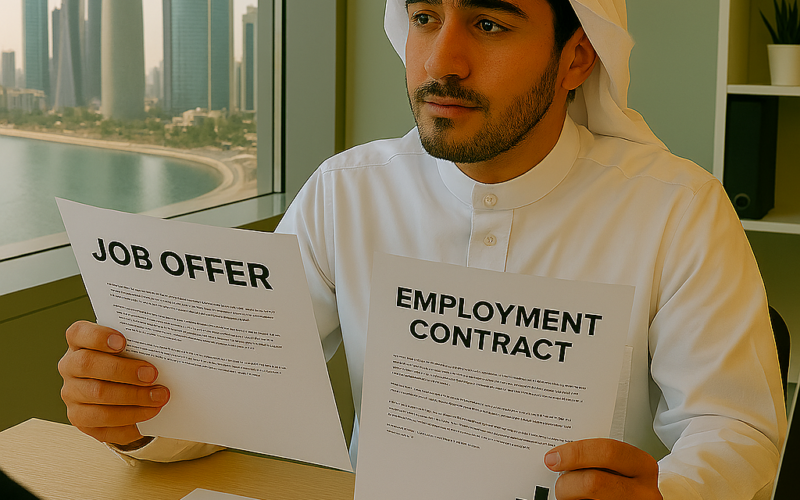

An experience letter is crucial for career growth in Gulf countries. If an employer refuses experience letter, employees may face challenges in future job applications, visa processes, and career credibility.
1. Understand Your Rights
- Employees are legally entitled to an experience certificate after employment
- Labor laws in most Gulf countries protect this right
- Refusal violates official labor regulations
2. Document Your Employment
- Collect payslips, emails, and official communications
- Maintain records of your job responsibilities and duration
- Proof strengthens your case in complaints
3. Communicate Professionally With Employer
- Request the experience letter in writing
- Politely explain its importance for future employment
- Keep copies of all correspondence
4. File Complaint With Labor Authorities
- Contact Ministry of Labor or equivalent labor office
- Submit proof of employment and refusal
- Authorities can order employer to issue the letter
5. Seek Legal Advice If Required
- Labor lawyer can provide guidance on escalation
- Court intervention may be needed in persistent refusal
- Legal action ensures protection of your career
6. Avoid Accepting Fake or Partial Letters
- Ensure the experience letter reflects actual duration and role
- Partial letters can affect credibility
- Always verify content before accepting
Conclusion
Handling situations where an employer refuses experience letter requires documentation, legal awareness, and professional communication. Taking proper steps ensures your career and reputation remain protected.
For verified Gulf job guidance, visit myjobsadvisor.com.
⚠️ Job Scam Safety Disclaimer:
Never accept fake or unofficial experience letters. Always verify employment records through official labor authorities.
🖼️ Featured Image Disclaimer:
The featured image used in this post is AI-generated and intended for illustrative purposes only.