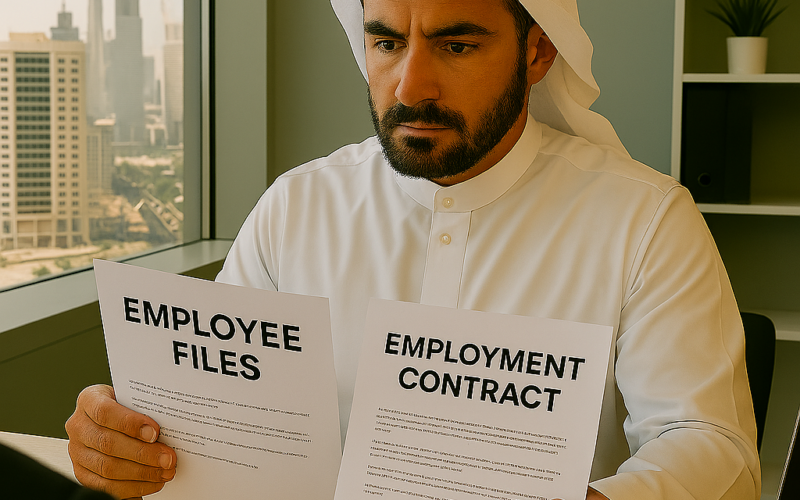

Employer disputes in Gulf countries can arise unexpectedly, whether due to unpaid salary, contract violations, or wrongful termination. Proper documentation is your best protection.
1. Employment Contract
- Written contract specifying:
- Job title and duties
- Salary and allowances
- Contract duration
- Probation period
- Protects against sudden changes and illegal termination
2. Offer Letter
- Confirms agreed-upon terms before joining
- Used to compare actual contract vs promises
- Helps prove employer commitments during disputes
3. Payslips and Salary Records
- Monthly payslips or bank statements
- Proves wages were paid (or not)
- Helps calculate compensation for unpaid salaries, overtime, or allowances
4. Correspondence With Employer
- Emails, WhatsApp, or text messages
- Proof of tasks assigned, agreements, or disputes
- Avoid verbal-only agreements; always document
5. Attendance and Work Records
- Clock-in/out records or HR attendance sheets
- Project completion records
- Supports claims regarding working hours, overtime, or unfair dismissal
6. Visa and Work Permit Documents
- Employment visa, labor card, residency permit
- Protects against illegal employer actions like visa cancellation or forced exit
7. Letters or Notices Issued by Employer
- Warning letters, unpaid leave notifications, promotion letters
- Establishes formal communication trail for legal proceedings
8. Final Advice
- Keep copies of all documents both digital and physical
- Organize by chronological order
- Use official formats whenever possible
- These documents strengthen your case in labor authorities or courts
⚠️ Job Scam Safety Disclaimer (Option 2)
Always maintain verified documentation of employment. Avoid relying on verbal promises or unofficial letters, as they may not hold in legal disputes. Use government-approved channels for dispute resolution.