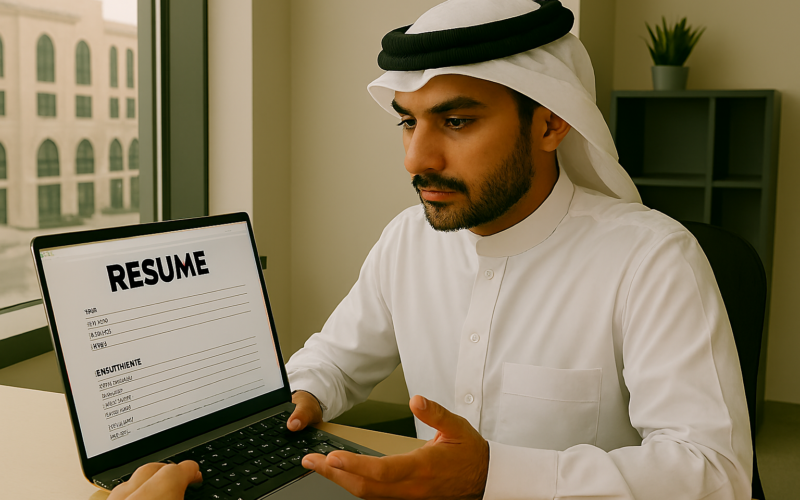

Applying for jobs in the Middle East requires a properly formatted resume. Employers in UAE, Qatar, Saudi Arabia, and other Gulf countries prefer a clean, structured, and professional resume that highlights skills and international experience.
1. Use a Professional Resume Layout
A clean and professional layout makes your resume easier to read.
Recommended structure:
- Name and contact details
- Professional summary
- Skills
- Work experience
- Education
- Certifications
2. Keep the Resume Length Ideal
- Best length: 2–3 pages
- Recruiters in Gulf countries prefer detailed yet clear resumes
- Avoid overly short or overly long documents
3. Add Personal Information (When Required)
Unlike Western resumes, Middle East resumes often include:
- Nationality
- Visa status
- Date of birth
- Gender (optional but commonly seen)
Only share what is appropriate and safe.
4. Use a Strong Professional Summary
Write a powerful 3–4 line summary that highlights:
- Years of experience
- Key skills
- Industries worked in
- Career goals for Gulf market
5. Highlight International Experience
If you have worked with:
- International clients
- Overseas projects
- Multinational companies
Mention it clearly to show global exposure.
6. Optimize for ATS Systems
Use simple fonts like:
- Arial
- Calibri
- Times New Roman
Avoid tables, text boxes, and images to keep it ATS-friendly.
7. Use Clear Bullet Points
Use bullet points to describe:
- Achievements
- Responsibilities
- Measurable results
This improves scanning speed for recruiters.
8. Save in the Correct File Format
Always save your resume in:
- PDF format (preferred)
- DOCX (if specifically requested)
Name your file professionally:
FirstName_LastName_Resume.pdf
Conclusion
Learning how to format a resume for Middle East jobs increases your chances of getting shortlisted. A well-structured, ATS-friendly, and region-appropriate resume can help you attract recruiters from UAE, Qatar, and Saudi Arabia.
For trusted job updates, visit myjobsadvisor.com.