
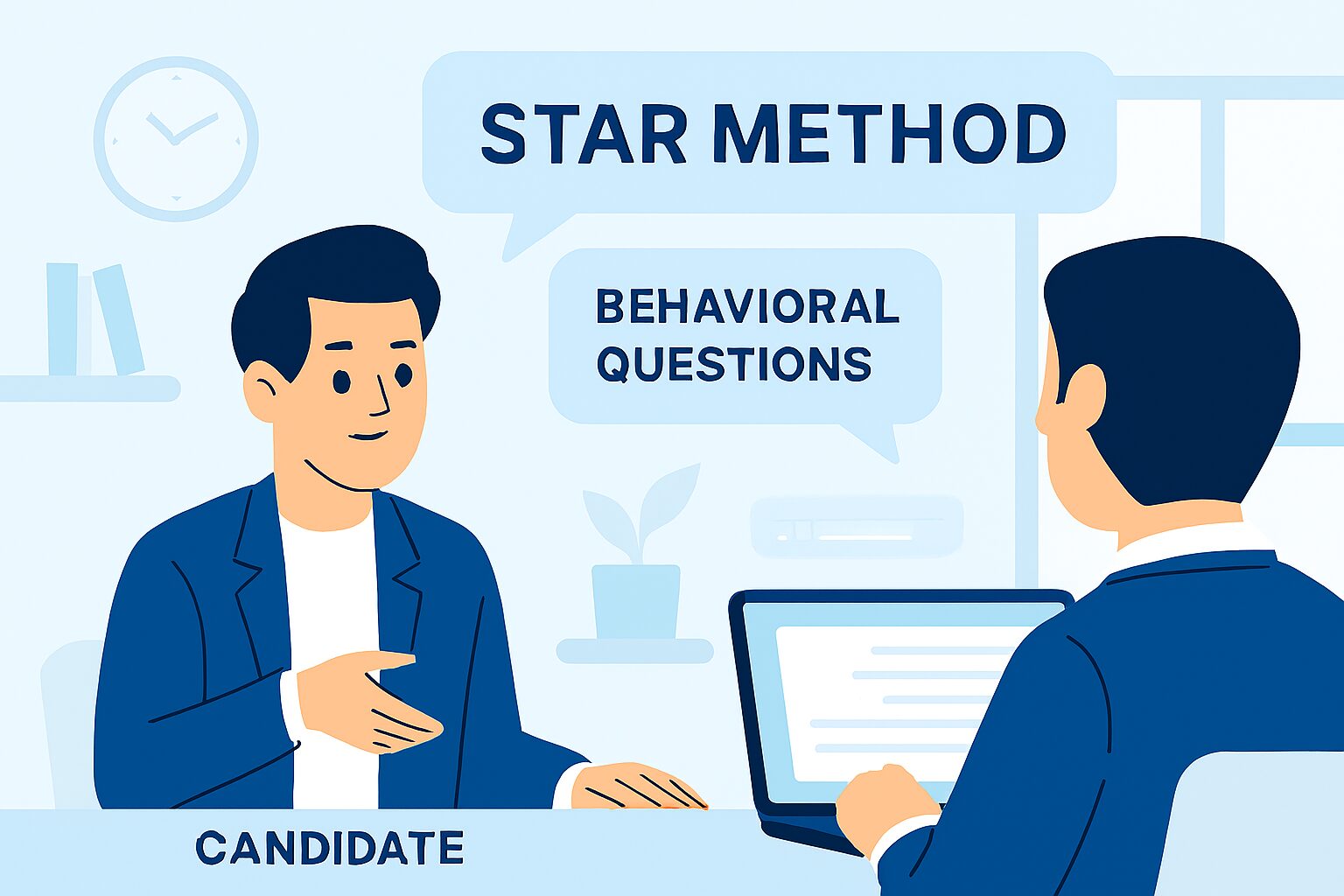
Behavioral interviews have become one of the most common hiring methods in 2025. Employers want real examples of how you handled past situations to predict how you will perform in future roles. Preparing well for these interviews can significantly increase your chances of landing the job.
In this guide, you’ll learn how to prepare effectively and answer behavioral questions with confidence.
1. Understand the Purpose of Behavioral Interviews
Behavioral interviews evaluate your:
- Decision-making
- Problem-solving
- Teamwork
- Leadership
- Conflict resolution
- Work ethic
Employers believe past behavior predicts future performance, which is why this interview type is so valuable.
2. Learn the STAR Method
The STAR method is the best way to answer behavioral questions clearly and professionally:
- S — Situation: Describe the context
- T — Task: Explain your responsibility
- A — Action: Share what you did
- R — Result: Highlight the outcome
This structure helps you give complete and impactful responses.
3. Review Common Behavioral Questions
In 2025, recruiters ask questions such as:
- “Tell me about a time you solved a difficult problem.”
- “Describe a situation where you had to work under pressure.”
- “Share an example of when you showed leadership.”
- “Tell me about a conflict at work and how you resolved it.”
Prepare 6–8 detailed examples you can use across multiple questions.
4. Match Your Examples to the Job Description
Study the job posting carefully and match your STAR stories to the skills the employer wants, such as:
- Communication
- Leadership
- Initiative
- Teamwork
- Adaptability
- Customer service
Tailoring your examples makes your responses more relevant.
5. Practice Out Loud
Practicing your answers helps improve clarity and confidence. You can:
- Record your responses
- Practice with a friend
- Use AI-based mock interview tools
- Review your tone and pacing
Be natural, not memorized.
6. Highlight Achievements with Quantifiable Results
Employers love to hear measurable impact.
Examples:
- “Reduced customer complaints by 30%.”
- “Completed the project 10 days before deadline.”
- “Trained 12 new team members.”
Numbers make your accomplishments more convincing.
7. Prepare Questions to Ask the Interviewer
Show your interest by asking smart questions such as:
- “What does success look like in this role?”
- “How does the team handle challenges?”
- “What are the company’s growth plans for 2025?”
This demonstrates confidence and career focus.
Conclusion
Behavioral interviews are a key part of the hiring process in 2025. With the STAR method, thoughtful examples, and professional communication, you can stand out and create a strong impression.
For verified job opportunities, visit myjobsadvisor.com, your trusted source for career growth.